
Decommissioning Brazil
16th October 2023
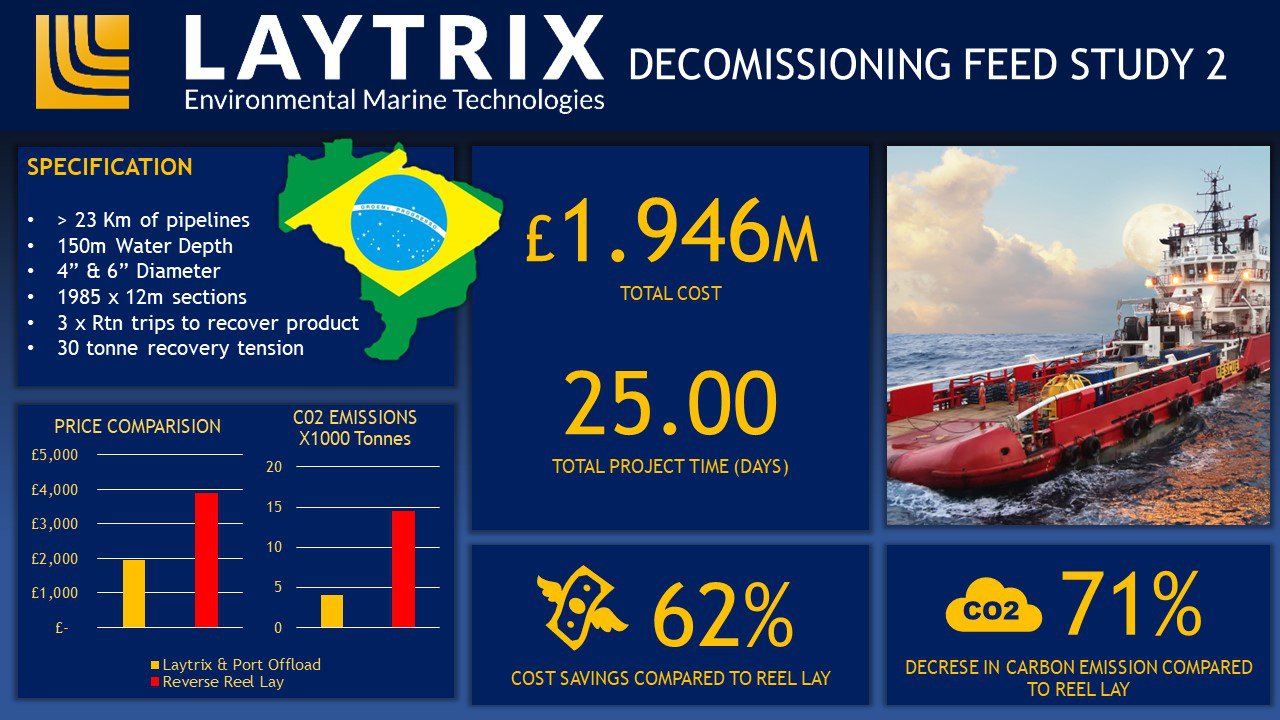
This study compared the Laytrix system against the reverse reel method via a reel lay method and was specific to a series of products of different diameter and length which were due to be recovered and scrapped as part of decommissioning scope which our client – a smaller independent – was due to undertake in Brazilian waters.
Flexible pipe diameters in the range of 4” to 6” and in lengths up to 6 Km with a total length of product of 23 Km were considered.
In addition to these parameters the study included aspects such as the maximum operational sea state, probability of the vessel remaining operational, location of local ports for the Laytrix system and deep water berths for the larger draught reel lay vessel as well as the quayside offloading or transpooling process allowing a comprehensive picture to be built up for both operations.
The results showed that whilst the reverse reel lay process was quicker for the offshore segment of work it was significantly slower for the quayside scope with this leading to large onshore costs as the products was unwound from the reel and cut into more manageable pieces onshore.
The total costs for the Laytrix system were around 62% of the reel lay spread with a significant reduction in the equivalent carbon dioxide emissions due to the use of smaller vessel and reduced sailing time to local harbours which could accept the anchor handler solution which Laytrix proposed as opposed to the deeper draught reel lay vessel.